
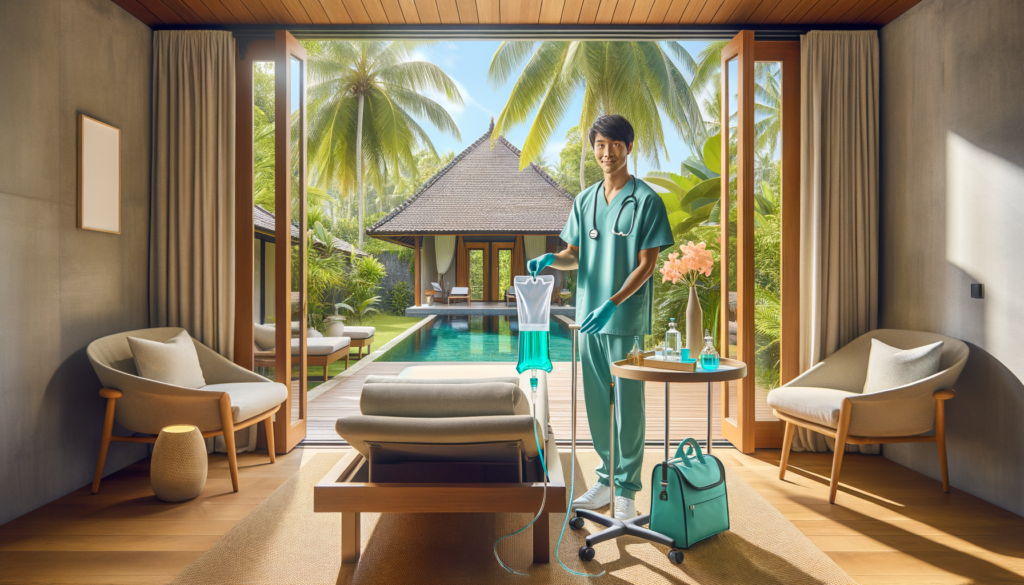
You have just landed in Bali after a long-haul flight, checked into your villa in Canggu, and the last thing you want to do is figure out how to get to a clinic. Whether you are nursing a hangover from Seminyak’s beach clubs, dealing with a bout of Bali belly, or simply running on empty after weeks of nonstop travel, the idea of sitting in traffic on a scooter to reach a medical facility feels almost cruel. That is exactly why mobile IV therapy has become one of the most practical health services available to travelers and expats on the island.
What Mobile IV Therapy Actually Means
Mobile IV therapy is straightforward: a qualified nurse or medical professional comes to wherever you are staying and administers an intravenous drip in the comfort of your room. There is no waiting room, no language barrier at reception, and no need to negotiate a taxi when you feel your worst. The nurse arrives with everything needed, sets up a clean workspace, places the IV line, and monitors you throughout the session. Most drips take between 45 minutes and 90 minutes, during which time you can rest, watch something on your laptop, or simply sleep.
In Bali specifically, this model works well because so many visitors stay in private villas, boutique hotels, and guesthouses spread across areas like Ubud, Seminyak, Uluwatu, and Canggu. These locations are often beautiful but logistically inconvenient for accessing healthcare. Mobile IV service closes that gap cleanly.
How the Booking and Arrival Process Works
The process is designed to be as low-friction as possible, especially when you are not feeling well.
Step 1: Contact and Consultation
You reach out via phone, WhatsApp, or an online booking form. A brief intake conversation covers your symptoms, any relevant medical history, allergies, and what outcome you are hoping for. This is not a formality. It helps the nurse prepare the right drip and flag any contraindications before arriving.
Step 2: Scheduling and Location Confirmation
You confirm your address and a time window. Depending on traffic and distance, same-day appointments are usually available. You can check which areas in Bali are covered to confirm your villa or hotel is within range.
Step 3: The Session Itself
The nurse arrives with sterile supplies, IV bags, and any add-on medications or vitamins already prepared. The session happens in your room. You stay horizontal or semi-reclined, the drip runs its course, and the nurse removes the line cleanly before leaving.
What Conditions and Situations People Commonly Treat
Mobile IV therapy is not a single-use service. The range of situations where people seek it out in Bali is wider than most expect.
- Dehydration from heat: Bali’s humidity is relentless. Even healthy, active people can become significantly dehydrated without realising it, especially when combining tropical heat with exercise or alcohol.
- Hangover recovery: A night out in Seminyak or a beach club day in Uluwatu can leave you in rough shape. IV hangover recovery works faster than oral rehydration because fluids and electrolytes go directly into the bloodstream, bypassing a stomach that may already be unsettled.
- Bali belly: Traveler’s diarrhea and gastrointestinal illness are common on the island. Oral rehydration becomes nearly impossible when nausea and vomiting are active. IV fluids restore hydration quickly, and anti-nausea medication can be administered alongside the drip. The Bali belly treatment is one of the most requested services for a reason.
- Jet lag and immune support: Long-haul travelers often arrive immunocompromised and exhausted. A high-dose vitamin C and B-complex drip can help the body recalibrate faster than supplements alone.
- General fatigue and burnout: Digital nomads and long-stay expats sometimes book IV therapy simply because they have been running hard for weeks and want a genuine reset. NAD+ therapy has become particularly popular for this purpose.
The Clinical Side: Why IV Beats Oral for Acute Situations
This is worth understanding rather than just accepting as marketing language. When you drink water or take an electrolyte tablet, your gut absorbs what it can and passes the rest. Absorption rates vary based on your current gut health, how dehydrated you are, and whether you are also experiencing nausea or vomiting. In an acute situation, the gut is often the least reliable route.
Intravenous delivery bypasses the digestive system entirely. Fluids, electrolytes, vitamins, and medications enter the bloodstream directly, which means faster onset and 100 percent bioavailability. For something like severe dehydration or active nausea, this difference is clinically meaningful, not just a convenience upgrade. That said, IV therapy works best as part of a broader recovery approach that includes rest, appropriate food, and continued oral hydration once your body can tolerate it.
What to Expect During the Session at Your Villa or Hotel
First-timers are sometimes anxious about having a medical procedure outside a clinic setting. A few things are worth knowing upfront.
- The nurse will confirm your identity and run through the intake information again before placing the line.
- A standard IV cannula goes into a vein in your arm, usually in the crook of the elbow or the back of the hand. Mild discomfort during insertion is normal and brief.
- You will feel the cool sensation of the fluid entering your arm. This is normal and typically resolves within a minute or two.
- The nurse stays with you or remains nearby for the duration. You are never left alone with the line in.
- If you experience any discomfort, swelling at the insertion site, or unusual symptoms, the nurse adjusts or stops the drip immediately.
- After removal, the site is cleaned and bandaged. There is usually minimal bruising, and it fades within a day or two.
Most people report feeling noticeably better within 30 minutes of the drip starting, with full effects becoming clear a few hours after the session ends.
Choosing the Right Drip for Your Situation
Not every IV drip is formulated the same way. A basic hydration drip is saline or Ringer’s lactate. A recovery drip adds electrolytes and B vitamins. A high-performance drip might include vitamin C, glutathione, magnesium, and zinc. For cognitive support and energy, NAD+ therapy involves a longer infusion with a different mechanism entirely.
The intake consultation before your session is the right moment to discuss what you actually need. A good provider will ask questions and recommend based on your specific situation, not just upsell the most expensive option. You can also browse the full IV drip catalog ahead of time to understand what is available and what each formulation targets.
Frequently Asked Questions
Is mobile IV therapy safe outside a clinic?
Yes, when administered by a qualified nurse or doctor using sterile equipment. The key factors are the credentials of the provider, the quality of supplies used, and whether proper monitoring happens during the session. Always confirm that the service employs licensed medical professionals and uses hospital-grade IV supplies.
How quickly can someone arrive at my villa?
Same-day appointments are usually available depending on your location and current demand. In popular areas like Canggu, Seminyak, and Ubud, arrival within a few hours of booking is typical. It is worth booking as soon as you know you need the service rather than waiting until you feel worse.
Can I get IV therapy at any hotel in Bali?
Most hotels are fine with in-room medical services, but it is worth checking with your property if you are unsure. Villas are almost always accommodating. Some larger hotels have specific procedures for external medical providers entering the premises, so a quick confirmation with the front desk is a reasonable step.
Is there anything I should do before the nurse arrives?
Drink as much water as you comfortably can, eat something light if your stomach allows, and make sure there is a comfortable place for you to lie or sit for up to 90 minutes. Wearing loose clothing with easy access to your arm makes placement simpler. Have your booking confirmation and any relevant medical information ready to share.
What if I have a serious medical condition alongside my symptoms?
The intake consultation is the right time to disclose any existing conditions, medications, or allergies. Certain conditions affect which drip formulations are appropriate. If there is any concern that your symptoms indicate something requiring emergency care rather than supportive treatment, the nurse will advise you accordingly and help you access the right level of care.
When to Get IV Therapy in Bali
The honest answer is: when you feel bad enough that rest and oral hydration alone are not cutting it, and you do not want to spend what limited time you have in Bali sitting in traffic trying to reach a clinic. That covers a wider range of situations than most people expect before they arrive on the island.
Revivel Life provides mobile IV therapy across Bali’s most popular areas, with qualified nurses who come to your villa or hotel and handle everything on-site. Whether you are dealing with a hangover, recovering from Bali belly, fighting jet lag, or simply need a proper reset after weeks of hard travel, the team can walk you through which drip makes sense and have someone at your door the same day. Browse the full range of available treatments in the IV drip catalog or get in touch directly to book your session.
Feeling Under the Weather in Bali?
Our licensed nurses bring IV therapy directly to your villa. Feel better in 30 minutes.
Chat With Our Nurse